Glamping in yurts vs safari tents is a choice that looks simple in photos but rarely feels simple on the ground. Both promise a bed, a roof and a touch of luxury in the outdoors, yet they behave very differently once the weather turns. A yurt can feel snug and warm while a canvas tent next door turns cold and damp, and the price gap between the two can be wider than you expect.
Pick the wrong one and a romantic weekend can turn into a shivering, soggy disappointment. This guide breaks down how each structure is built, how they handle rain, heat and cold, what you’ll realistically pay and when to book, which destinations suit each best, and how to vet a site before you commit. By the end, you’ll know exactly which one matches your trip, your budget and your tolerance for a chilly night.
What Is a Yurt? Structure, Space and Feel
A yurt is a circular tent-style structure that descends from the dwellings of Central Asian nomads, though modern glamping versions are usually built on a wooden platform. The walls are made of a collapsible lattice of wooden slats that curve up to a conical roof, held together at the top by a central compression ring. Many yurts also feature a skylight dome at the crown of the roof, which floods the interior with daylight and lets you stargaze from bed.
Inside, the round footprint typically offers between 150 and 400 square feet of floor area, enough to sleep anywhere from 2 to 6 guests on proper beds or futons arranged around the walls. Solid lattice walls covered with a felt or insulated liner give the space a surprisingly cabin-like feel. Unlike a thin-walled tent, a lined yurt feels enclosed and quiet, closer to a small studio than a campsite.
Living in the round
One thing first-time yurt guests notice is how the shape changes the layout. A central support pole anchors the roof, and the curved walls mean no true corners, so furniture tends to hug the perimeter while the middle stays open. Beds, a small table and storage usually ring the space, which works well for groups but rewards packing light. If you like the idea of a cozy, self-contained round room with a dome overhead, a yurt delivers a feel no rectangular tent can match.
What Is a Safari Tent? Structure, Space and Feel
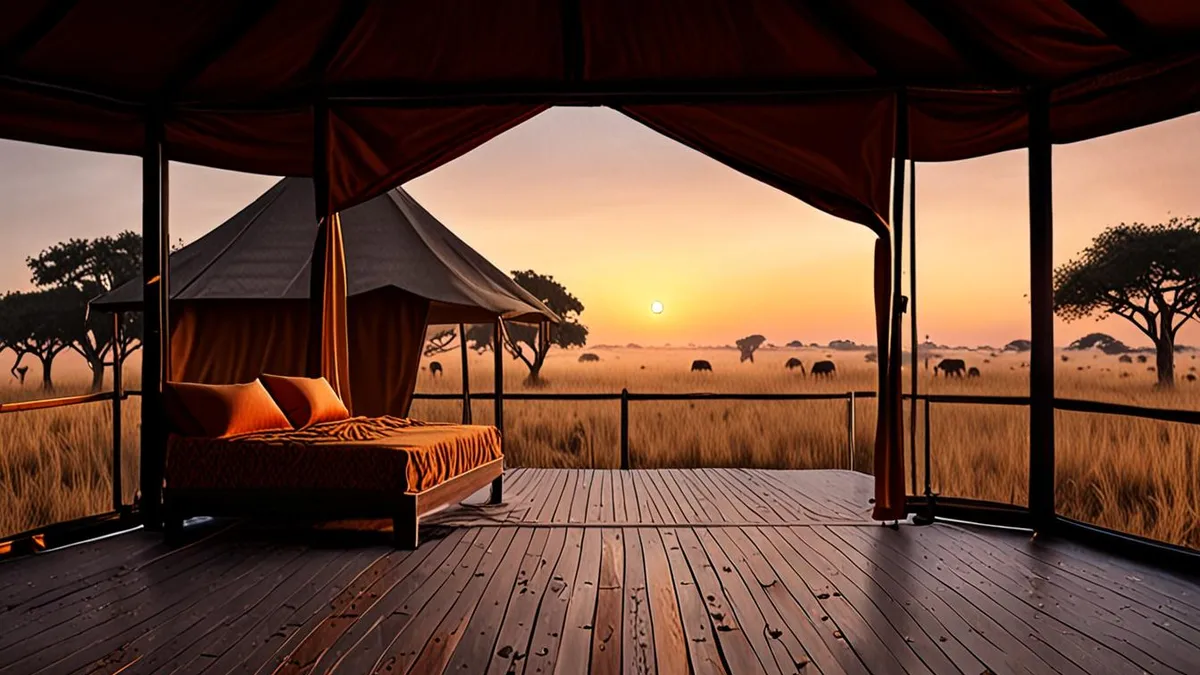
A safari tent is a large canvas tent stretched over a fixed frame, often raised on a wooden deck, and its design borrows directly from the expedition camps of African safaris. That heritage shows in the proportions: these are big, upright structures with tall ceilings and a commanding presence, nothing like a dome tent pitched on the ground. The deck underneath adds a level, dry floor and often extends into a veranda with chairs for slow mornings.
Space is the safari tent’s biggest selling point. Most offer between 250 and 500 square feet, usually sleeping 2 to 5 guests, and the rectangular layout makes the interior feel more like a small cottage than a tent. Zipped canvas walls and mesh windows let you open the whole structure to the breeze during the day and seal it up at night, creating an open, close-to-nature atmosphere that many travelers love.
What’s inside
Unlike traditional camping, most safari tents come properly furnished. Expect real beds with proper mattresses, and on many sites a small kitchenette plus an en-suite bathroom, so you may never need to walk to a shared shower block. Details vary widely between operators, so it pays to confirm exactly what each tent includes before booking. If your idea of glamping involves stepping out of bed onto a deck with a coffee, watching the landscape wake up, the safari tent format was built for exactly that.
Comfort and Weather: Which Handles Rain, Heat and Cold Better?
Weather is where yurts and safari tents part ways most sharply. An insulated yurt with a wood stove can stay comfortable down to around 20°F (-6°C), which makes it a realistic option well beyond summer. That combination of solid lattice walls, a lined interior and a heat source means many yurt sites operate through the shoulder seasons and even winter, when most canvas accommodation has long since closed for the year.
Safari tents tell a different story. Canvas breathes well in hot weather, which is why they shine in warm climates, but thin canvas gets cold and damp once temperatures drop below roughly 50°F (10°C). In prolonged heavy rain, a safari tent can leak or feel humid inside, while a yurt’s sloped conical roof sheds water efficiently and keeps the interior drier. This is a big reason many safari tent sites run mainly from May through September and shut down in winter.
Airflow versus enclosure
There’s a trade-off even in good weather. Mesh-heavy safari tents offer excellent airflow on warm nights, but all that open mesh means less privacy and less noise insulation than a lined yurt. You’ll hear the campsite, and the campsite may hear you. A yurt, by contrast, feels sealed and quiet once the door flap is closed. If your trip falls outside high summer or rain is likely, lean toward the yurt; if you’re chasing warm, dry nights with the breeze coming through, the safari tent fits better.
Price and Booking: What You’ll Pay and When to Reserve
Price is one of the clearest differences between the two. Yurts typically run $100-$300 per night, while safari tents sit slightly higher at $150-$400, with large decked models commanding the top of that range. In practice, you’ll often find a comparable yurt at a site costs $30-$80 less than its safari tent neighbor, largely because canvas structures on wooden decks cost more to build and maintain.
Timing matters just as much as the choice of structure. Peak season in most temperate regions runs roughly May-September, and that’s when rates climb and availability shrinks. Shoulder months like April and October can cut rates by 20-30% while still offering pleasant weather, especially in milder climates.
Yurts also stretch your money across more of the year. Because insulated yurts stay comfortable down to around 20°F (-6°C) with a stove, many sites keep them open when canvas safari tents have closed for winter. That longer season means shoulder-season and even winter nights at a yurt often deliver the best value per night of any glamping option.
- Midweek dates, even in peak season, frequently price $20-$50 below Friday and Saturday nights at the same site, so shifting your stay to Sunday-Wednesday is the easiest discount to find.
- Some sites list a base rate that excludes extra guests, linen packages or firewood, so confirm what’s included before comparing a $150 yurt against a $150 safari tent.
- Holiday weekends (Memorial Day, Labor Day) behave like mini peak seasons on top of peak season; treat them with the same urgency as summer Saturdays.
- Cancellation policies on glamping sites are often stricter than hotels, with some requiring two weeks’ notice for a refund, so read the fine print before locking in a non-refundable peak booking.
- If a site offers gift vouchers or off-season specials, winter yurt stays are usually where the deepest discounts appear, sometimes a third below summer rates.
Best Trips for Each: Matching the Stay to Your Destination
When a yurt is the better pick
Pick a yurt if your destination is mountainous, snowy or at high altitude. Insulated walls and a wood stove make the difference between a cozy night and a miserable one when the temperature drops, and a well-insulated yurt keeps guests warm even when it’s around 20°F (-6°C) outside. A round, enclosed space also feels right in a forest clearing or a mountain meadow, where the highlight is the view through a skylight rather than a deck.
Families of 4-6 also fit better in a large yurt. The circular layout with beds arranged around the walls keeps everyone in one room without anyone sleeping in a drafty corner, and the solid lattice walls muffle noise from restless kids or early-rising parents.
When a safari tent is the better pick
Choose a safari tent for warm, dry climates, lakesides and savanna-style landscapes where the veranda is the whole point. Sipping coffee on a raised wooden deck at sunrise is the experience you’re paying for, and zipped canvas walls let you live half outdoors. Couples who want that indoor-outdoor flow suit a safari tent far better than a family squeezing in.
One check matters more than price when comparing sites: bathrooms. Some safari tents come with a full en-suite bathroom, while others share a bathhouse a short walk away, and the same spread applies to yurts. Confirm this before booking, because a shared facility changes the feel of the trip far more than a modest difference in the nightly rate.
How to Vet a Glamping Site Before You Book
Photos on booking platforms can be years old, and glamping sites vary wildly in what they actually provide. Two units listed on the same site can sit in completely different condition, especially where canvas and wood are exposed to the elements year-round. A few direct questions before you pay will save you from arriving at a tent with no heat in October or a yurt a ten-minute walk from the nearest toilet. Work through this list before you commit.
- Ask for the exact heating setup. Find out whether the unit has a wood stove, an electric or propane heater, or nothing at all, and confirm that matches the season you’re traveling. A stove that sounds charming in a listing is a problem if you’re expected to keep it burning all night, so ask whether firewood is provided and how much it costs.
- Request recent photos of the interior and deck. Ask specifically for pictures taken within the last year, and confirm the bed configurations — a “sleeps 5” listing might mean two real beds and an uncomfortable futon. Also check whether linen service is included or you need to bring sleeping bags.
- Check the bathroom situation. If the unit isn’t en-suite, ask how far the nearest bathroom is and whether it’s shared with how many other units. Also confirm whether the site is walk-in or drive-up, since carrying luggage and firewood 300 yards changes the trip.
- Read reviews for weather mentions. Search reviews specifically for words like rain, wind and temperature. Guests who stayed through a storm will tell you whether the canvas leaks or the yurt stayed warm, which tests the site’s weather claims better than any listing description.
Send these questions as a single message rather than five separate ones — most site owners answer thoroughly, and how quickly and clearly they respond tells you a lot about how the stay itself will go. Ask about cooking facilities and lighting at the same time, since some units run on limited solar power with no outlets for charging devices. If answers are vague or the photos don’t materialize, treat that as a warning sign and keep looking. A good host will usually reply within a day or two with specifics, and that responsiveness is often the best predictor of a smooth stay.
Yurt or Safari Tent: The Key Differences at a Glance
Both options look equally glamorous in photos, but they deliver very different experiences. A yurt is the sturdier, more weatherproof choice: its insulated walls and sloped roof handle cold and rain far better, and nightly rates of $100-$300 tend to run lower than safari tents. If your trip involves mountains, snow or shoulder-season dates, the yurt is usually the safer pick.
Safari tents fight back on space, offering 250-500 sq ft compared with a yurt’s 150-400, plus that all-important veranda for warm-weather, indoor-outdoor living. Both typically sleep small groups of 2-6 guests, and both need serious lead time: plan 2-6 months ahead for peak-season weekends at popular sites. Match the structure to your climate and season, and either one can be a memorable stay. If this helped you decide, leave a comment or share the article with a fellow traveler.